

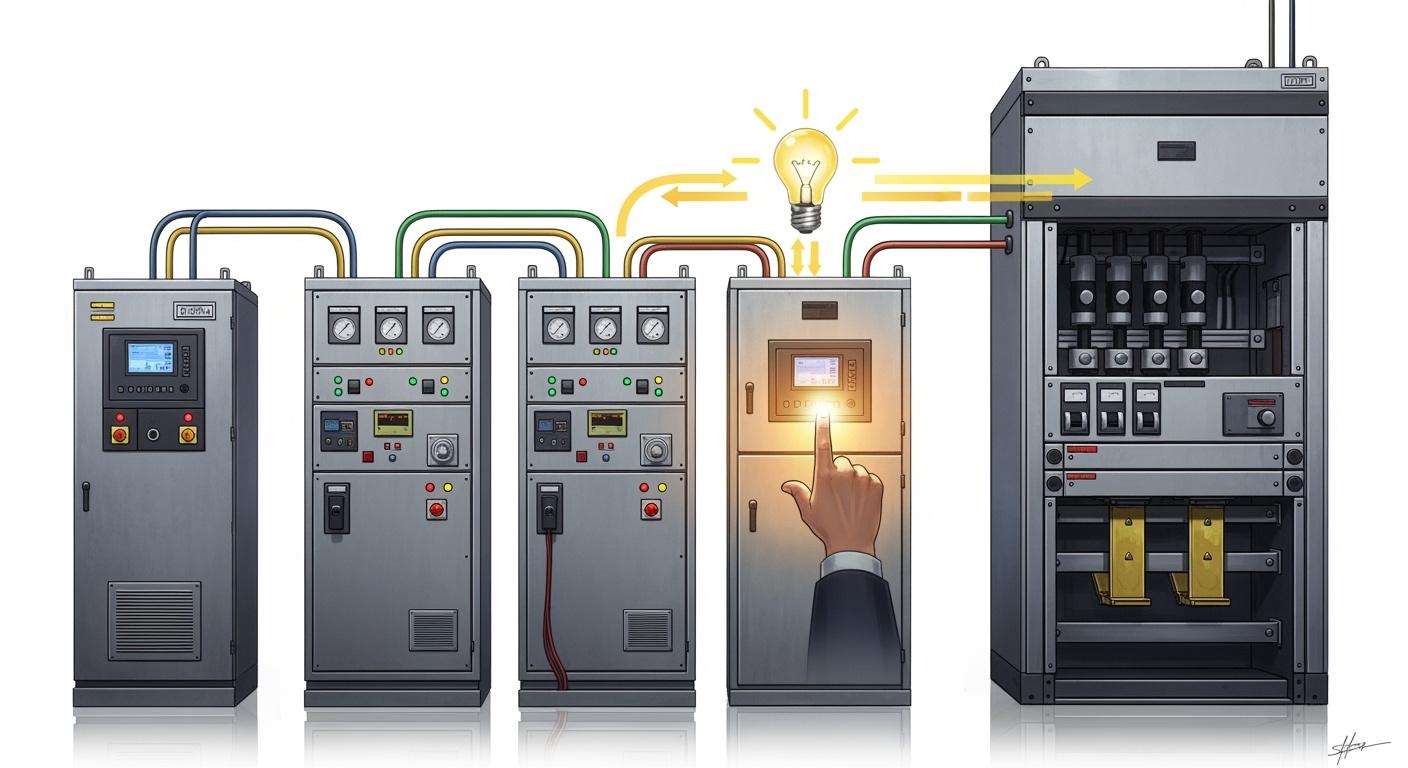
You have an important job when you pick the Efficient switchgear for your building, especially considering the role of power distribution. The world market for switchgear is growing quickly and is projected to reach $197.68 billion by 2033.
You should know about low-voltage, medium-voltage, and high-voltage electrical switchgear. Each type plays a crucial role in power distribution and keeps your equipment safe in its own way. Choosing the right electrical switchgear enhances safety, improves efficiency, and saves energy.
| Aspect | Impact |
|---|---|
| Safety | Ensures compliance with safety regulations and reduces risks from power distribution problems. |
| Reliability | Maintains operations during issues by utilizing backup systems and protection. |
| Energy Efficiency | Prevents equipment wear and ensures optimal performance by addressing power distribution issues. |
When you pick electrical switchgear carefully, your business benefits from improved power distribution, enhanced safety, and overall better performance.
Key Takeaways
- Picking the right switchgear keeps your power system safe. It also makes it work better and saves energy.
- Learn how low, medium, and high-voltage switchgear are different. This helps you choose what works best for you.
- Think about things like temperature and humidity. These matter when picking indoor or outdoor switchgear.
- Use new technology like IoT and AI to watch your power system. This can help stop problems before they start.
- Taking care of switchgear often is very important. It keeps people safe and makes the equipment last longer. This also helps you avoid expensive repairs.
Electrical Switchgear Types and Voltage Levels
Low-Voltage Switchgear Overview
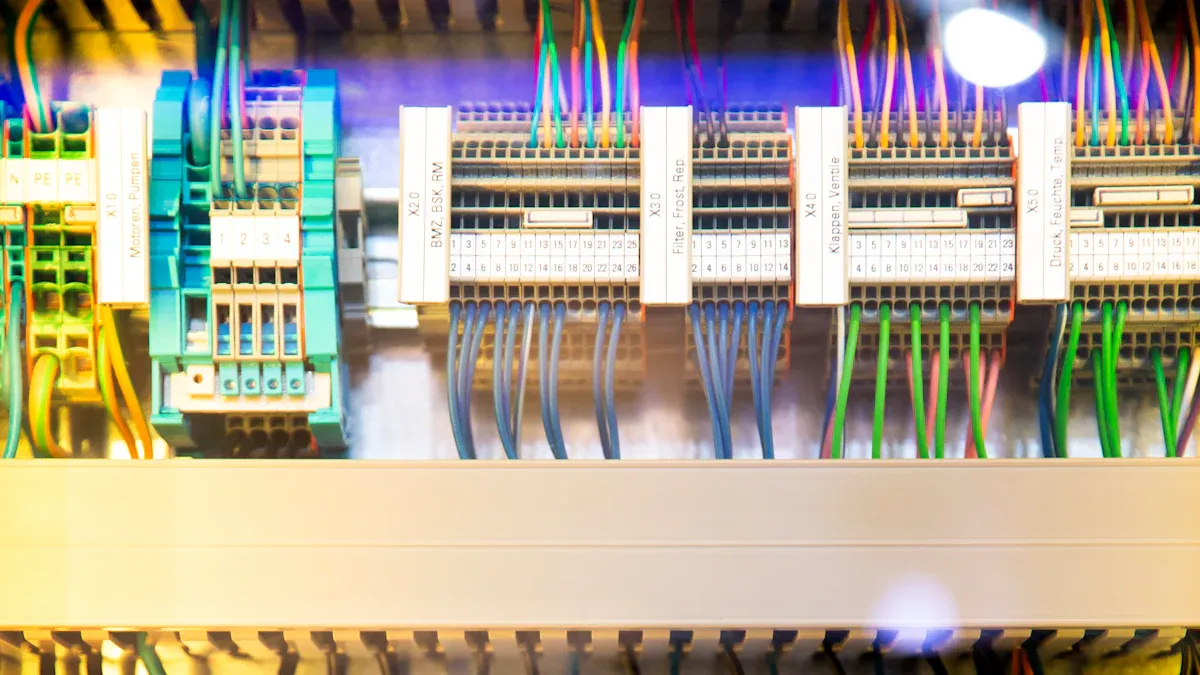
Low-voltage switchgear helps control and protect circuits with low voltage. Most homes, offices, and small factories use low voltage. Low voltage means up to 1,000 volts. Groups like IEC and IEEE agree on this number. You find low-voltage switchgear where safety and easy repairs are important.
| Voltage Classification | Voltage Range |
|---|---|
| Low Voltage | Up to 1,000 volts |
Low-voltage switchgear is used in many places. It controls lights and air conditioning in buildings. It keeps home appliances safe from voltage spikes. In data centers, it switches between main and backup power. Hospitals use it to keep important machines working safely.
Medium-Voltage Switchgear Basics
Medium-voltage switchgear works with higher voltages than low-voltage switchgear. It is used for systems that need more power, like big factories, hospitals, and utility substations. Medium voltage is from 1,000 to 36,000 volts. This switchgear has parts like circuit breakers, instrument transformers, and protection relays.
| Voltage Classification | Voltage Range |
|---|---|
| Medium Voltage | 1,000 to 36,000 volts |
Medium-voltage switchgear protects equipment from problems and helps control power in large buildings. You also see it in power plants and renewable energy sites.
High-Voltage Switchgear Explained
High-voltage switchgear handles very high voltage. It is used in power transmission and big substations. High voltage starts above 36,000 volts and can be much higher. High-voltage switchgear must follow strict safety rules, like IEC 62271-200 and UL 489i. These rules make sure the equipment is safe with high voltage.
| Voltage Classification | Voltage Range |
|---|---|
| High Voltage | Above 36,000 volts |
High-voltage switchgear is used to move electricity over long distances. It protects the power grid and keeps power going to cities and industries.
Key Differences and Applications
You need to pick the right switchgear for your needs. Low-voltage switchgear is good for homes and small businesses. Medium-voltage switchgear fits large buildings and factories. High-voltage switchgear is best for power plants and transmission lines. Each type has its own voltage range and use.
Tip: Always check the voltage level before you choose switchgear. The wrong type can cause safety problems or damage equipment.
| Type of Switchgear | Typical Application |
|---|---|
| Low-Voltage Switchgear | Homes, offices, data centers, hospitals |
| Medium-Voltage Switchgear | Factories, utility substations, power plants |
| High-Voltage Switchgear | Transmission lines, large substations |
Picking the right switchgear makes your power system safer and more reliable.
Power Distribution System Designs
Radial, Loop, and Network Systems
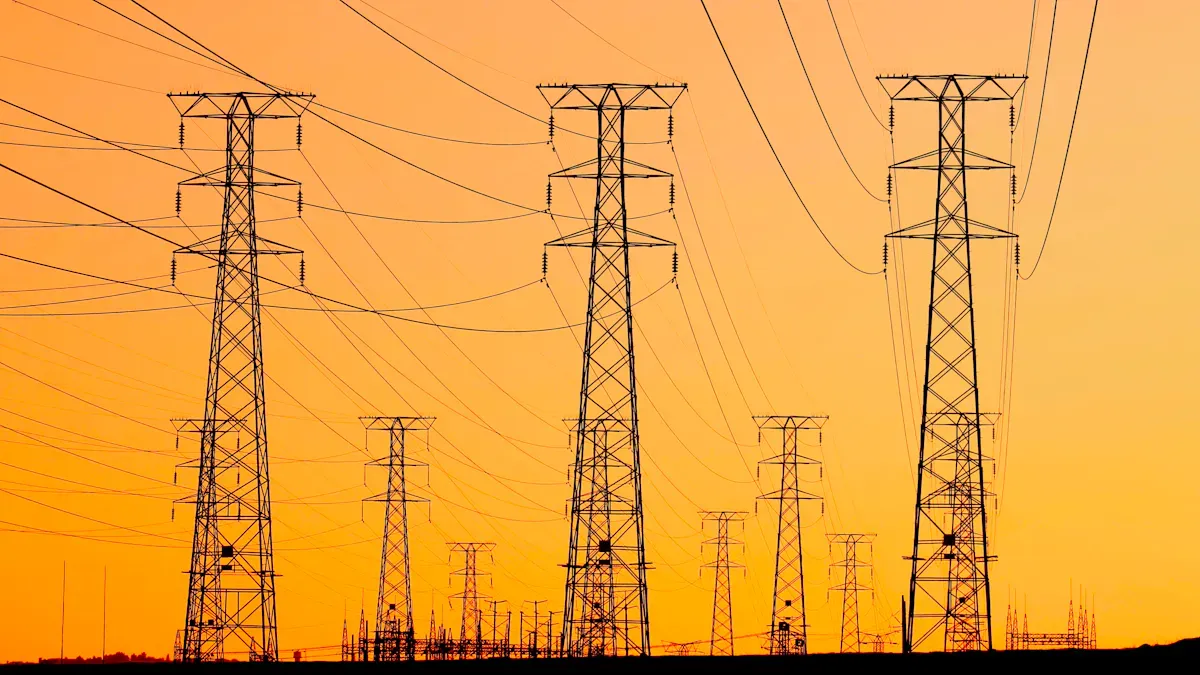
There are three main ways to design a power system. Each way has good and bad points. Radial systems send power in one direction from the source to your equipment. This way costs the least and uses less space. If the main source stops working, you lose power until it gets fixed. Expanded radial systems add more transformers to make things more reliable. But you can still lose power if a feeder or transformer breaks.
Loop distribution systems have two or more paths for power. These systems are more reliable because power can come from different ways. If one path stops, another path can keep things running. Loop systems cost more money and need careful planning so they do not get overloaded.
Network distribution systems are for big and complicated power needs. These systems are the most reliable and have very little downtime. They use many sources and routes, so power keeps going even if one part fails. Network systems cost the most and need advanced control systems.
| System Type | Advantages | Disadvantages |
|---|---|---|
| Radial System | Least expensive initial cost. Simple and space-efficient. | Least reliable due to single utility source. Service loss if source fails. |
| Expanded Radial System | Can be expanded for increased reliability. | Still has service loss risk if a transformer or feeder fails. |
| Loop Distribution | Higher reliability with multiple supply routes. Quicker restoration. | More expensive to install and maintain. Needs careful planning. |
| Network Distribution | High reliability with minimal downtime. Handles complex demands. | Very expensive. Needs sophisticated control systems. |
Tip: Pick a system that matches your needs and budget.
Integrated Electrical Ecosystems
You can make your system more reliable by using integrated electrical ecosystems. These systems put together UPS, static transfer switches, and switchgear. UPS systems keep power on when generators start. They work in less than 10 milliseconds, so your equipment does not lose power.
Static transfer switches move loads to backup power during outages. They protect important servers and equipment. Switchgear helps control and protect the flow of electricity.
Modern systems use IoT sensors to track things and find problems right away. AI and predictive analytics help your equipment last longer and stop downtime. Remote management lets you check and control your system from anywhere. This saves money and makes things work better.
| Feature | Benefit |
|---|---|
| IoT-enabled sensors | Real-time tracking and fault identification |
| AI and predictive analytics | Prolongs equipment life, reduces downtime |
| Remote management | Enhances ROI, minimizes operational costs |
- UPS systems keep power steady.
- They fill the gap when generators are starting.
- Static transfer switches move loads to backup power.
- They keep important equipment working during outages.
You get a strong and reliable power system when you use these technologies together.
Core Functions of Electrical Switchgear
Protection and Safety Features
Switchgear helps keep your electrical system safe. It uses circuit breakers, disconnect switches, and protective relays to control electricity. These parts work together to find problems like short circuits or overloads. When something goes wrong, circuit breakers act fast. They stop the current and protect your equipment from damage. This quick action also stops electrical fires and keeps people safe.
Switchgear lets you safely turn off circuits for repairs. This means you can fix things without getting shocked. New switchgear technology lets you watch your system in real time. You can find problems before they get worse.
- Fast action for short circuits and overloads
- Safe shut-off for repairs
- Real-time checks to spot problems early
The main job of switchgear is to protect your system and everyone using it.
Control and Automation
Switchgear does more than just protect your system. It helps you control and automate your power. Circuit breakers are important for switching and control. Automation helps your system run smoothly and handle changes in power. You get steady power because circuit breakers react quickly to problems.
Automation also saves you money. You waste less energy and have fewer breakdowns. Circuit breakers with smart control can find faults early. Real-time data helps you balance loads and keep things steady. This means you spend less time fixing things and more time working.
Tip: Use automation to make your system safer and more efficient.
Monitoring and Diagnostics
You need to know what is happening in your electrical system. Modern switchgear has tools to watch and measure things. Circuit breakers now have sensors that track data all the time. You can use special systems and analytics to look at lots of information.
Smart maintenance uses AI and machine learning to find problems early. Watching circuit breakers and other parts in real time keeps your system running. You can fix small problems before they get big. This keeps your power steady and your equipment safe.
| Monitoring Feature | Benefit |
|---|---|
| Real-time data tracking | Finds problems early |
| Predictive maintenance | Fewer surprise breakdowns |
| Advanced analytics | Helps you make better choices |
Switchgear with good monitoring and checks gives you peace of mind and a reliable system.
Selection Criteria for Switchgear
Picking the right switchgear is very important. You need to think about your power needs. You should also check how strong and long-lasting the equipment is. It is good to see if it works well and saves energy. All these things help you make a safe and steady system.
Power Needs and Technical Parameters
First, you need to know what your system needs. Make a list of all the things that use electricity. Some things do not run at the same time. You should add up the total load in kilovolt-amperes (kVA). Use the right math to find out how much current you need.
You need to look at some technical things before you pick switchgear:
| Parameter | Description |
|---|---|
| Rated Voltage (kV) | LV (<1kV), MV (3.3-36kV), or HV (66kV+). |
| Rated Current (A) | Ranges from 100A (homes) to 4000A (industry). |
| Short-Circuit Capacity (kA) | Handles fault currents, e.g., 25-50kA for MV. |
| Arc Extinguishing Methods | Options include vacuum (clean), SF6 (compact), or air (simple). |
| Busbar Layout | Ensures balanced power distribution, like highways for electricity. |
| Compliance with Standards | Follows UL (U.S.), IEC 62271 (Europe), ANSI C37 (global) standards. |
Think about where your system will be used. Data centers and factories that run all day need strong switchgear. Hot places, dust, or chemicals can break equipment faster. Pick designs and materials that can handle these hard places.
Tip: Always match the rated voltage and current to your system. This keeps your equipment safe and helps it last longer.
Quality, Durability, and Compliance
Good quality and strong switchgear are important. Good switchgear lasts longer and keeps power on. Look for products that meet world and local rules. These rules make sure your equipment is safe and works right.
| Compliance Type | Description |
|---|---|
| International Standards | IEC 62071 and IEC 61438-2 ensure safety and compatibility. |
| National Standards | GB/T series matches local power grid needs. |
| Quality System Certification | ISO 90001 means strong quality control and reliable products. |
| Product Certification | Needed for big projects, like the National Grid, to meet high safety standards. |
Check if your switchgear is arc-resistant. This keeps workers and equipment safe from arc flashes. Make sure everyone knows how to stay safe. Use safety gear and follow the rules.
Rules can be different in each place. In North America, ANSI rules focus on design. In other places, IEC rules focus on how things work. Always check which rules you need to follow.
Note: Check and fix your switchgear often to keep it safe and working well.
Energy Efficiency Considerations
Saving energy helps you spend less and protect nature. New switchgear uses smart tech and real-time checks. These tools help you find problems early and use less energy.
- Smart grids can save 20 to 30 percent energy.
- Predictive maintenance can cut energy costs by 15 to 25 percent.
- Real-time checks help you find waste and fix it fast.
Pick switchgear that lets you use automation and remote checks. This makes your system work better and easier to control.
Tip: Choose switchgear with energy-saving features to lower bills and help the earth.
Practical Tips for Matching Switchgear to Application Scenarios
You need to pick switchgear that fits your system. Here are some tips:
- Make sure your switchgear can handle normal and fault currents.
- Pick a busbar layout that matches your needs. Use a single bus for simple systems. Use a double bus for more choices.
- Decide if your switchgear will be inside or outside. Check if it is safe from dust and water.
- Add new features like protective relays and remote checks.
- Think about how easy it is to fix your switchgear and how much it costs over time.
- Always follow the right rules for your area.
Different places need different switchgear. Factories need strong, metal-clad switchgear for big loads. Hospitals and offices use small, easy-to-care-for switchgear. Utility companies use outdoor switchgear that is easy to add to and watch.
Plan for the future too. Look at the total cost of your switchgear over its life. This includes buying, fixing, and saving energy. Sometimes, changing old switchgear can save more than 40% of your project cost.
Callout: Good planning and the right switchgear help you avoid problems and keep your power system working well.
Installation and Environmental Factors
Indoor vs. Outdoor Installations
You need to pick if your switchgear goes inside or outside. This choice changes how well it works and how long it lasts. Indoor switchgear is safe from rain, snow, and sun. You can control the temperature and humidity inside. This makes it easier to keep clean and fix.
Outdoor switchgear has more problems. You must protect it from weather and dirty air. Hot days can hurt the insulation. Cold days can make parts hard to move. The best humidity is between 45% and 75%. Too much water in the air can hurt insulation. Too little can cause static shocks.
Dust and dirt can pile up on outdoor equipment. This makes it wear out faster and need more repairs. Bad gases, like sulfur dioxide, can make switchgear not last as long. Rain and snow can flood or break the equipment. Sunlight can slowly damage the insulation.
Tip: Always look at the local weather before you pick indoor or outdoor switchgear.
Key environmental factors to consider:
- Temperature changes
- Humidity levels
- Dust and pollution
- Corrosive gases
- Rain, snow, and flooding
- Sunlight and UV exposure
Space and Environmental Constraints
Space is important when you put in switchgear. In busy cities, there may not be much room. Many buildings use underground systems to save space. Small switchgear designs help you fit them in tight places. Modern gas-insulated switchgear (GIS) uses SF6 gas. This makes the units smaller and keeps out water and dust.
A new project showed modern switchgear can save 40% of floor space. This helps you save money and use your building better. Outdoor switchgear must handle bad weather and dirt. Indoor switchgear needs to fit in small spaces and be easy to fix.
- Small switchgear fits well in tiny rooms.
- Gas-insulated units are good for wet or dusty places.
- Outdoor units need strong cases for storms and dirty air.
Note: Always match your switchgear to your space and weather for the best results.
Trends in Power Distribution and Switchgear
Digitalization and Smart Grids
Power systems are changing a lot today. Digitalization makes the electrical grid smarter and better. Utilities use data from smart meters to help you save energy. They also use it to make their work easier. Artificial intelligence and machine learning help guess how much power people will need. These tools also keep the system working well.
- Smart meters show real-time information to you and the utility company.
- Utilities use this data to give you tips to save energy.
- AI and machine learning find problems before they cause outages.
Modern power networks are not simple anymore because of digitalization. There is more data in the system now. Intelligent medium voltage switchgear is very important for handling these new challenges. It gives protection, helps with automation for quick fixes, and lets people control things from far away. These new tools help utilities keep power steady and efficient, especially as more renewable energy is used.
You get steady power and fewer outages because of these changes. Utilities can fix problems faster and keep everything working well.
Key digital trends:
- Advanced Metering Infrastructure (AMI) gives you and utilities real-time data.
- Distributed Energy Resource Management Systems (DERMS) help control renewable energy.
- AI and machine learning make maintenance and reliability better.
Sustainability and Renewables Integration
You see more solar and wind energy in your area now. Switchgear design is changing to work with these new energy sources. Gas-insulated switchgear (GIS) units are small and fit in cities or on offshore platforms. These units protect their parts from bad weather and pollution. This makes them safer and more reliable.
- GIS units are good for places with little space.
- Sealed designs keep out dust and water, so there are fewer outages.
- GIS can handle high-voltage loads and keeps power steady when renewable energy changes.
You help the earth by using systems that work with renewables. Modern switchgear lets you use clean energy and still have reliable power. You will see fewer outages and safer systems as technology gets better.
Tip: Pick switchgear that works with digital features and renewable energy. This helps you have a power system ready for the future.
Best Practices for Power Distribution Equipment
Step-by-Step Selection Guide
You can make good choices for your electrical system by following easy steps. Here is a simple guide to help you pick the right switchgear:
- Check installation and location: Look at where you will put the equipment. Think about how to protect it, ground it, and if you can reach it easily.
- Plan for operation: Learn how your system works when things are normal and when there are problems. Make a plan for repairs and make sure your team knows what to do.
- Pick equipment that meets your needs: Make sure the switchgear fits your voltage, has backup power, finds faults fast, and saves energy.
- Focus on safety: Use the right protection like circuit breakers and fuses. Set clear rules for using the equipment.
| Design Factor | Description | Consideration for Equipment |
|---|---|---|
| Voltage Levels | Safe transmission and distribution | Choose the right transformer rating |
| Redundancy | Keeps power on if one part fails | Use dual systems or transformers |
| Fault Detection | Finds problems fast to prevent damage | Add circuit breakers and relays |
| Energy Efficiency | Reduces power loss | Use high-quality, efficient parts |
Common Pitfalls to Avoid
You can stop many problems by watching out for these mistakes:
- Not thinking about future growth. If you only plan for now, you might need expensive upgrades later.
- Picking the wrong protection level. If your switchgear cannot handle big faults or bad weather, it can break and put people in danger.
- Ignoring the environment. Always think about temperature, humidity, and where you put the equipment.
Tip: Always plan for changes and check your site before you pick your switchgear.
Maintenance and Lifecycle Management
You keep your switchgear working well by taking care of it. Good maintenance helps you stop breakdowns and keeps your system safe.
- Watch the temperature at important spots like circuit breaker contacts and busbars. This helps you find overheating early.
- Look at your equipment often. Check for dust, rust, or anything that looks wrong.
- Clean your switchgear with low-pressure air and special cleaners. This keeps insulation and contacts in good shape.
- Follow a set plan for maintenance. Doing regular checks is better and cheaper than waiting for something to break.
- Use preventive maintenance. This means you fix small problems before they turn into big ones.
Note: A good maintenance plan can help your switchgear last longer and cut down on downtime.
You have to think about a few things when picking switchgear for your power system. The table below lists the most important things to check:
| Criteria | Description |
|---|---|
| Voltage Level | Pick the right type for your system and insulation needs. |
| Application Requirements | Make sure the switchgear fits how you will use it, like for transmission or distribution. |
| Installation Environment | Decide if you need equipment for inside or outside. |
| Short Circuit Levels | Check that your switchgear can handle faults safely. |
| Maintenance Considerations | Plan regular checks based on where you put it and what kind you have. |
If you pick equipment that is safe, reliable, and efficient, your power system will be stronger and cost less. Keep learning about new trends and always follow the best rules. For more help, check resources from trusted electrical standards groups.
FAQ
What is the main job of electrical switchgear?
Switchgear protects your electrical system. It controls the flow of electricity and stops power when there is a problem. You stay safe, and your equipment does not get damaged.
How do you choose the right switchgear for your building?
You should check your voltage needs, space, and safety rules. Pick switchgear that matches your power load and fits your location. Always follow local standards.
Can you use indoor switchgear outside?
No, you cannot use indoor switchgear outside. Outdoor switchgear has special protection against rain, dust, and sunlight. Always use the right type for your location.
Why does energy efficiency matter in switchgear?
Energy-efficient switchgear helps you save money and protect the environment. You use less power and reduce waste. Modern switchgear often includes smart features for better control.
How often should you maintain your switchgear?
You should check your switchgear every few months. Clean it, look for damage, and test safety parts. Regular care keeps your system safe and working well.