

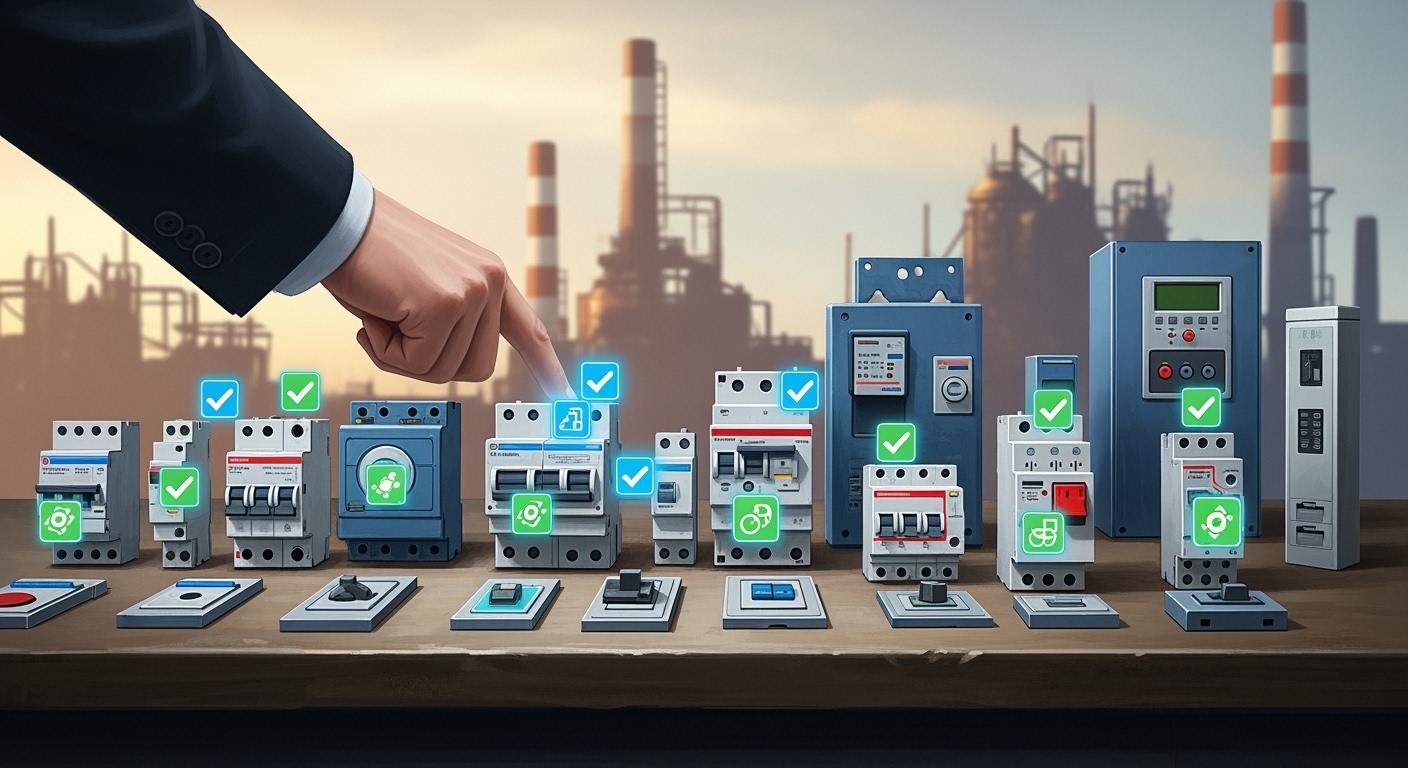
You use Low Voltage Distribution to manage and guard electrical systems in many places. These places are homes, factories, and power plants. This equipment keeps the voltage safe and steady. Selection criteria help you choose the right switchgear. The world market for low voltage electrical equipment gets bigger every year.
- Common sectors:
- Residential
- Commercial
- Industrial
- Power generation
- Utilities
- Transportation
Key Takeaways
- Low-voltage switchgear is very important. It keeps electrical systems safe in homes, factories, and power plants. It stops overloads and short circuits. This makes sure everything works safely and stays stable.
- When you pick switchgear, think about what your system needs. Look at voltage, current, and how your system might grow. Good planning helps you avoid expensive problems later.
- Always follow safety rules and certifications like IEC and UL. This makes sure your switchgear follows the law and works safely. It keeps people and equipment safe.
Low-voltage distribution overview
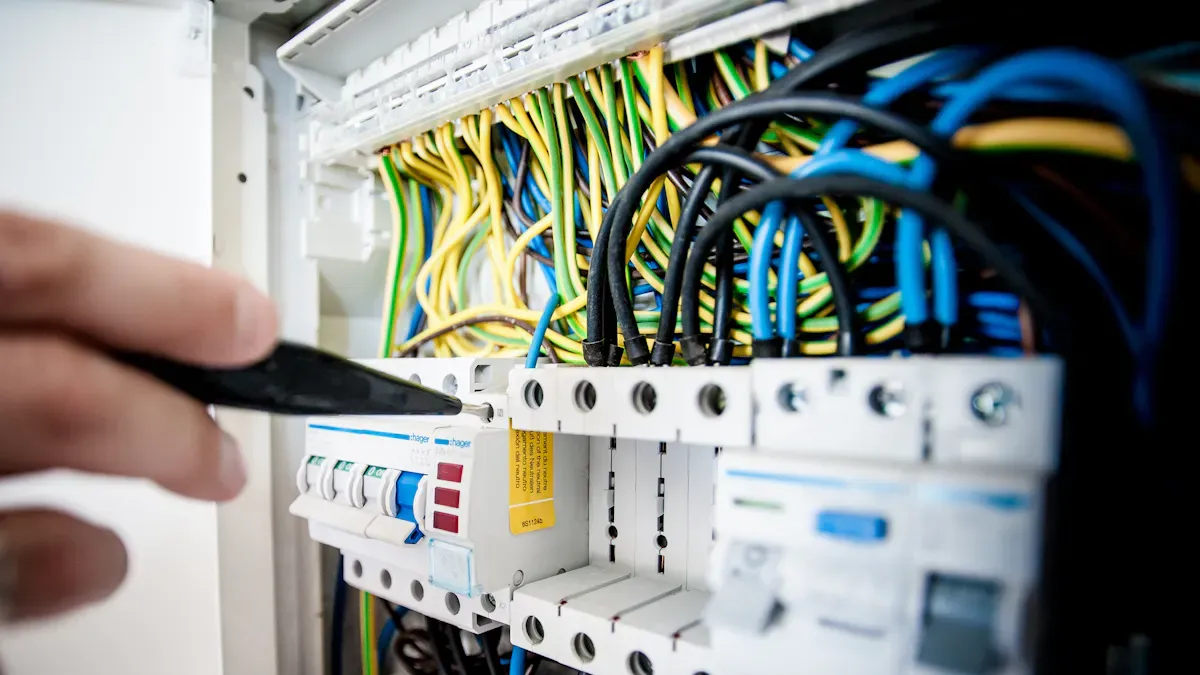
Core functions of low-voltage equipment
Low voltage switchgear helps keep electrical systems safe. It makes sure everything works well in many places. You can see these parts in homes, schools, and factories. These devices help you control and protect your power supply. Here are the main things they do:
- Stops appliances from getting hurt by short circuits.
- Lets you turn off parts for safe repairs.
- Guards against fault currents to lower danger from high currents.
- Lets you control the power system for emergency shutdowns.
Switchgear is needed to keep your electrical system working right. Using the right low-voltage parts lowers the chance of damage and keeps people safe.
Types of low-voltage components
There are many kinds of low voltage switchgear in an electrical setup. Each kind has its own job. The table below shows the main low-voltage parts and what they do:
| Component Type | Function Description |
|---|---|
| Protection Components | Keep circuits safe from too much power or surges. Examples are fuses and surge protection devices (SPDs). |
| Control Components | Help manage power and make systems work by themselves. Examples are contactors and relays. |
| Monitoring and Measuring | Watch how electricity is used and how well it works. Examples are meters and power analyzers. |
| Distribution Components | Make sure power is shared safely and well. Examples are distribution boxes and busbars. |
| Automation and Communication | Help control and check on systems. Examples are programmable logic controllers (PLCs). |
You should pick the right low-voltage parts for your needs. Low voltage switchgear helps you control power, protect equipment, and keep your system working well. You will see switchgear in many shapes, but all types work together to keep power safe.
Selection criteria for low-voltage equipment
When you pick low-voltage switchgear, you need to follow some rules. These rules help you find the best equipment for your system. You have to think about technical needs, safety, and where it will be used. This part gives you a guide to help you choose well.
System requirements and compatibility
First, you need to know what your system needs. Every electrical system is different. You should check the voltage, current, and how much power is used. Doing the math helps you pick the right size. If you know the highest power needed, you can stop problems like small equipment or voltage drops. Using diversity factors helps you size things better by lowering the total load. Always plan for more use in the future so you do not have to spend more money later.
To choose well, you should:
- Make a list of all machines, lights, and HVAC units.
- Write down the power and hours each one works.
- Use demand and diversity factors to guess the real top load.
- Collect transformer ratings, cable lengths, and line impedance.
- Figure out the biggest short-circuit current with standard ways.
You also need to check the voltage and current for each breaker and switchgear. Make sure they can handle short circuits and stop them if needed. The equipment must work with your current system. If you use the wrong breaker or switchgear, you could get overheating, failures, or downtime.
| Aspect | Details |
|---|---|
| Initial Costs | Low-voltage systems cost less at first. |
| Infrastructure Needs | May need bigger cables and more parts for high use. |
You need to use cables and wires that can carry the right amount of current. Insulation like PVC or LSZH keeps things safe. If you follow these rules, your system will be safe, work well, and have fewer problems.
Environmental and installation factors
Where you put your switchgear changes how it works. You need to look at temperature, humidity, dust, and air quality. Each thing can change how your equipment runs.
| Environmental Factor | Impact on Low-Voltage Equipment |
|---|---|
| Temperature Extremes | Makes resistance go up, which can cause voltage drop and heat. Big changes can stress joints and insulation. |
| Humidity | Can make water drops, causing short circuits. Water lowers insulation strength. |
| Dust | Dust can fill gaps and cause problems or failures. |
| Air Quality | Bad air or gases can hurt contacts and materials. |
| Seasonal Weather | Rain or floods can let water in. Storms can cause surges. |
You also need to think about space and how easy it is to reach. If you do not have much space, you need smaller switchgear. You must leave room for safe work and repairs. Good access helps you ground the system and test it. If you forget these things, your system may not work well or be safe.
- Space and access change how you set up your equipment.
- You need enough room for safe work and repairs.
- Good access helps you ground and test breakers safely.
Safety standards and certifications
You must follow safety rules and get the right certificates for your switchgear. These rules keep people and property safe. International rules like IEC 60364 and IEC 61439 are important. In North America, UL rules and the National Electrical Code matter. CE marking shows you follow the rules in Europe.
- IEC: International Electrotechnical Commission rules.
- UL: Underwriters Laboratories rules for North America.
- ANSI: American National Standards Institute rules, part of the NEC.
- CE: European rules for the European Economic Area.
- 3C: China Compulsory Certification for China.
- TüV: Technical Inspection Association rules in Germany.
| Certification Standard | Description |
|---|---|
| CE Mark | Shows you meet EU safety, health, and environment rules. |
| IEC 60950-1 | Safety for IT and communication equipment. |
| IEC 62368-1 | Safety for IT and AV equipment. |
| FCC Compliance | Makes sure signals do not cause problems. |
| UKCA Mark | Shows you meet rules for Great Britain. |
| KC Mark | Korean safety rules. |
| CCC Mark | Needed for China. |
| INMETRO Mark | Safety and rules in Brazil. |
You must check that your switchgear and breakers have the right certificates for your area. This step makes sure your system is safe and follows the law.
Reliability and maintenance
Reliability is very important when you pick switchgear. You want your equipment to last a long time. Mean Time Between Failures (MTBF) tells you how reliable it is. A high MTBF means your equipment will last longer and break less. This number helps you plan repairs and know how long your system will work.
You need to set up a plan for regular care. Checking and cleaning your switchgear keeps it working well. Thermal imaging helps you find hot spots before they cause trouble. If you follow a good plan, your system will last longer and you will have less downtime.
| Maintenance Practice | Benefit |
|---|---|
| Preventive schedule | Makes equipment last longer, stops failures |
| Regular inspections | Finds problems early, keeps things safe |
| Cleaning and testing | Helps things work better, stops breakdowns |
You must decide when and who does the care. A good plan keeps your system safe and working well.
Common mistakes in selection
Many people make mistakes when picking low-voltage switchgear. These mistakes can hurt how your system works and its safety. You need to avoid these common errors:
| Mistake | Consequences | How to Avoid It |
|---|---|---|
| Wrong Wire or Cable | Signal loss, overheating, short life | Check specs, do the math, pick the right cables |
| Bad Routing or Ignoring Environment | EMI, rust, damage | Keep away from high-voltage, use good insulation |
| Loose or Bad Connections | Failures, shorts, wear | Use the right tools, tighten, test circuits |
| Ignoring Power and Voltage Drop | Weak devices, overheating, safety risks | Use calculators, pick the right power supplies |
| Skipping Tests and Records | Hidden problems, hard fixes, code issues | Test everything, write down all work |
| Not Planning for the Future | Hard repairs, no room to grow, high costs | Use good cabling, label, manage cables |
You should always check your guide and follow best steps. Do not skip tests or records. Plan for the future and keep cables neat. These steps help your system stay safe and work well.
Tip: Today, selection rules include digital monitoring and smart switchgear. These systems give you live data, fault alerts, and event logs. You can use this info to make things work better and fix problems. Digital twins and smart meters help you see your system and lower losses. As tech changes, you need to update your guide to add these new tools.
Low voltage switchgear in distribution
Role of switchgear in power distribution
Low voltage switchgear helps keep your electrical system safe. It acts as the main control for your network. Switchgear protects every part of your setup. You use it to turn off power when something goes wrong. This stops fires and keeps your equipment safe. Switchgear also guards against short circuits, overloads, and ground faults. If you use switchgear that follows IEEE C37.20.1 rules, your system works better and lasts longer. Switchgear can handle tough places, so your voltage stays steady. You keep your system safe and your work going without problems.
- Turns off power in problem areas
- Keeps your electrical setup stable and safe
- Stops dangers like fires and injuries
UL 1558 switchgear for industrial applications
UL 1558 switchgear is good for places with lots of power. This switchgear uses breakers in separate sections. You get more safety and easier repairs. Insulated busbars and space let you use higher voltage safely. You can check and fix things from the front or back. The switchgear has extra arc flash protection to keep you safe. You do not have to turn off everything to fix it. The switchgear is tested to make sure it works well. You see it in factories, data centers, hospitals, big buildings, and power stations. UL 1558 switchgear can handle strong short-circuit currents and keeps your system working.
- Needs breakers in their own sections for safety
- Has insulated busbars for high voltage use
- Lets you fix things without turning off everything
Panelboards in commercial and industrial settings
Panelboards split big electrical feeds into smaller circuits. This gives you more control and keeps each branch safe. Your system becomes safer and works better. Panelboards are modular, so you can change them for different needs. You can use them in offices or factories. Each part of your system gets the right voltage and protection. Panelboards help you manage your equipment and keep things running smoothly.
Tip: Pick the right panelboard for your voltage and load. This helps your system work better and stay safe.
Applications across industries
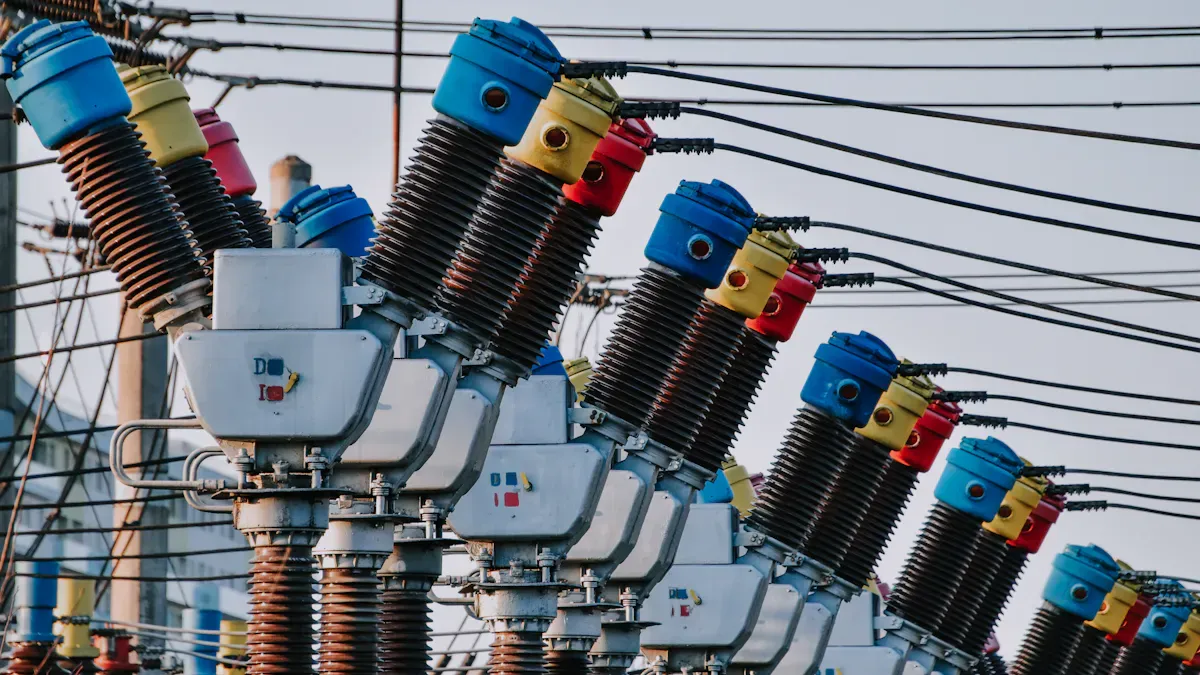
Industrial plants and heavy machinery
Low voltage switchgear is used in many factories. It helps you control and protect your electrical system. You also use it to watch how your system works. This equipment is important for automation, lights, and safety. The table below lists common uses and why they matter:
| Application | Description |
|---|---|
| Industrial Ethernet Networks | You use special cables for fast control and checking. |
| Programmable Logic Controller (PLC) | You connect sensors and machines for automation at 24VDC. |
| LED Lighting Controls | You save energy by using low voltage lighting. |
| Security and Access Control | You use low voltage for alarms and door systems. |
| Fire Alarm and Life Safety Systems | You follow NFPA 72 rules for emergencies. |
| Building Automation Systems (BAS) | You control HVAC and save energy with low voltage networks. |
| Power Monitoring and Metering | You check power use and plan repairs with low voltage signals. |
You need to pick switchgear that meets safety and insulation rules. It must also handle overloads. This keeps your system safe and your power working well.
Data centers and IT facilities
Data centers need low voltage switchgear to keep running. This system gives steady power and protects your servers. You can change or upgrade your setup easily. You save energy and lower your costs. You must follow rules like IEC 60364 and UL 1558 for safety. You also need strong circuit protection and backup systems to keep your equipment safe.
Healthcare and hospitals
Hospitals use low voltage switchgear to keep people safe. Isolation stops dangerous voltage from reaching patients and staff. You must follow IEC 60601-1 for medical safety. You need selective tripping so only the problem circuit turns off. Closed transition switching keeps power steady for life-saving machines. You must meet NFPA 70, NFPA 99, and NFPA 110 for emergency power and safety.
Commercial buildings
Offices, hotels, and stores use low voltage switchgear for lights, HVAC, and safety. The table shows main uses:
| Application Area | Description |
|---|---|
| Power Management | You control lights and HVAC with safe, smart systems. |
| Safety Compliance | You follow wiring and fire codes for safety. |
| Critical Systems Support | You keep important systems running in hotels and hospitals. |
Low voltage systems help you save energy and lower cooling needs. You can use Power over Ethernet to work better.
Utilities and infrastructure
Utilities use low voltage switchgear to move power safely. Underground and overhead cables connect your system. Enclosures, bus bars, and circuit breakers protect your network. Surge arresters and fuses stop overloads and faults. You must check IP and IK codes for dust and impact safety. You need strong switchgear to handle short circuits and keep utility power safe.
You must understand how to select low-voltage switchgear for your system. This helps you keep your system safe and reliable.
- Check your system’s needs and choose the right switchgear for your equipment.
- Use switchgear with strong safety features and follow standards like IEC 61439-1 and IEC 61439-2.
| Standard | Description |
|---|---|
| IEC 61439-1 | General rules for low-voltage switchgear assemblies |
| IEC 61439-2 | Power switchgear and controlgear assemblies |
You should ask experts and read technical documents before you pick switchgear. This keeps your system working well and protects your equipment.
FAQ
What is the main reason to use low-voltage switchgear?
You use low-voltage switchgear to protect your electrical system. It stops overloads and short circuits. It keeps your equipment safe and your power stable.
How do you choose the right switchgear for your building?
You check your power needs, safety rules, and space. You pick switchgear that matches your voltage and current. You follow local standards for safety.
Can you use low-voltage equipment outdoors?
You can use low-voltage equipment outdoors if you pick weatherproof models. Look for enclosures with IP ratings. These keep dust and water out.